
Bricolage 8
A revival of my formerly-ongoing series of links, asides, and quick hits

0. Meta-Bricolage
Back when I started this substack, three years ago, I had the ambitious goal of publishing weekly. On that schedule, I felt justified in sending out occasional miscellanies. But after a few good months, my schedule flagged. There were various reasons for this—it was probably overly-ambitious to begin with, especially when combined with my ongoing shot story series (which at first I was even trying to record as audiobooks as well as write and publish as ebooks!); but of course the rapid decline and death of my father played a huge role, too. And since I had promised at the outset “to never let the substantive essays drop down to less than every second post”, as the quantity dropped in 2024 and 2025, I stopped doing the bricolage posts altogether; my last one was September of 2023.
But I have tried, this year, to get my posts back on a more regular track, and have so far done pretty well: for the last seven weeks I have posted once per week (plus one off-schedule post). In fact, I think I have done well enough to justify another bricolage. So here we go.
Attention conservation notice: many of the things quoted, linked or said here are from my Substack notes feed; if you read that you can probably skip this.
1. They Will Pry My Em-Dashes Out From Between My Cold Dead Fingers
As you probably know—at least if you are online enough to be reading this—em-dashes are, apparently, beloved of our new AI overlords. This has led to a push-back against the em-dash.
This is a terrible thing.
Now I thought I had adequately deal with this nonsense with the brief Emily Dickinson pastiche I wrote thirteen months ago when I first heard about the issue:
They say that using em-dashes—
Can prove—that you're AI—
No human ever uses them—
No matter when—nor why—

But if you find them suitable—
Or even perfect—form—
Deploy them well—and often—
And brace for coming storm—
I think we should all agree that that ought to have put the issue to bed.
And yet, somehow, it didn’t. It seems further argumentation was required. Fortunately, the superb substacker Colin Gorrie is on the case:
I’ve been using em-dashes since I was in graduate school back in 2008. I used them in my dissertation. I use them in birthday cards to friends and family. I’ve used them in many of the articles I’ve written for this newsletter. But now, every time I write one, a small voice in my head whispers “Better get rid of it. People are going to think this is AI.” So it gets replaced with a semicolon, a colon, or a period….
Anxiety about AI writing is, paradoxically, making us worse writers. We’re voluntarily surrendering the writerly tools we want to use — the ones that would be the best thing for the piece we’re writing — simply because machines have learned to imitate them…. the em-dash is part of your heritage as a writer of the English language. Don’t let it be taken away from you!…
So I went back to my Shakespeare article and I put those em-dashes back in. Every last one of them. They were, after all, good little em-dashes, doing the job they’re supposed to do: cracking open a window in the middle of a thought, letting you peer through it, and then closing it again.
It’s a great essay, which goes into its similarity to the prior panics, the importance of the em-dash in Lawrence Sterne and Emily Dickinson, what’s wrong with AI writing, and all sorts of other great stuff. Read the whole thing.
One thing I’ll add is this: Another writer whose key uses of em-dashes he doesn’t mention is Wittgenstein, particularly the later Wittgenstein, in the Philosophical Investigations. The Investigations are a series of rethinks, questions, saying-one-thing-and-then-doubting it; it’s essential not just to the style but to the philosophy. Here, for instance, is section §165 of the Investigations, chosen almost at random:
But surely—we should like to say—reading is a quite particular process. Read a page of print and you can see that something special is going on, something highly characteristic.—Well, what does go on when I read the page? I see printed words and I say words out loud. But, of course, that is not all, for I might see printed words and say words out loud and still not be reading. Even if the words which I say are those which, going by an existing alphabet, are supposed to be read off from the printed ones.—And if you say that reading is a particular experience, then it becomes quite unimportant whether or not you read according to some generally recognized alphabetical rule.—And what does the characteristic thing about the experience of reading consist in?—Here I should like to say: “The words that I utter come in a special way.” That is, they do not come as they would if I were for example making them up.—They come of themselves.—But even that is not enough; for the sounds of words may occur to me while I am looking at printed words, but that does not mean that I have read them.—In addition I might say here, neither do the spoken words occur to me as if, say, something reminded me of them. I should for example not wish to say: the printed word “nothing” always reminds me of the sound “nothing”—but the spoken words as it were slip in as one reads. (Translated by G. E. M. Anscombe)
The point is the sort of half-turns, re-thoughts, clarifications, objections, that sound so much like someone thinking out loud, as it were conversing with himself, is deeply integrated not only with Wittgesntein’s style but also his philosophy. And it is centered around the em-dash.
A related thought to Colin Gorrie’s came in this brief note from Philosophy Bear:
LLM’s use dashes a lot because there’s a limited sense in which they’re extremely good writers- LLM writing is easy to read, and LLM flow is good. Dashes are great for flow and comprehension because dashes are best interpreted prosodically - as a call for a certain sort of pause- rather than grammatically.
Modern writers are taught to think of punctuation as a grammatical instrument, but it’s much easier to follow writing in which punctuation is treated as a prosodic instrument. The dash is the refuge of prosody. Incidentally, this is how I generally use punctuation. It means “pause here for a bit”- not some godawful nonsense about clauses.
I think Bear’s point about punctuation as prosody is key, and it connects to one of my favorite essays. It was written by Nicholson Baker and was originally published in the New York Review of Books under the title “Survival of the Fittest”; it was later republished in Baker’s collection The Size of Thoughts: Essays and Other Lumber (1996) under the perhaps less misleading title “The History of Punctuation”. Baker’s point basically is about the importance of treating punctuation as prosody, not a series of technical rules; I find it both convincing and important. But along the way he talks not only about em-dashes:—he talks about the hybrids:
The nineteenth century didn’t think the dash on its own was nearly enough.… [T]he single most momentous change in twentieth-century punctuation [was] the disappearance of the great dash-hybrids. All three of them—the commash ,—, the semi-colash;—, and the colash :—(so I name them, because naming makes analysis possible)—are of profound importance to Victorian prose, and all three are now (except for certain revivalist zoo specimens to be mentioned later) extinct. Everyone used dash-hybrids. They are in Dickens, Wilkie Collins, Charlotte Brontë, and George Meredith. They are on practically every page of Trollope… in Thackery… in George Eliot.
Baker gives a number of possible reasons for this, but seems to settle (convincingly) on the need for standardization, for rules;—the making of punctuation into a mere technical question, rather than making it a conveyance of meaning.
So fight back against The Machine:—use em-dashes;—and even hybrids.—When it suits your meaning, of course.—And brace for coming storm.
2. Some of the Problems with AI are Really Problems With Broader Society
A couple of different things I want to link to revolve around this theme.
First, Noah Berlatsky points out that the ability of AI to degrade writing and journalism is only possible because of twenty or more years of degredation of its status prior to the advent of AI in “Journalists Have Been Turning Into AI Slop For Years”:
AI is tempting for many because creative endeavor, except by a handful of superstars, is already wildly devalued. If you are a mid-level slogger AI can seem like the only way to pursue a creative career without working 24-7 and/or starving to death. Authenticity may be the purpose of art in theory, but in practice—again, unless you happen to be a superstar—the capitalists with the money mostly want to pay for the thing they’ve seen before, delivered as slickly and with as few surprises as possible.
Starting off on the flip side, historian (and substacker) Timothy Burke had a great essay about how he uses AI effectively in class. It sounds like a good idea! But then he notes that his technique is not remotely scalable; it “is predicated on being a professor at a small college that has small classes, considerable resources and students who are generally well prepared for higher education. It’s also a result of a high degree of pedagogical freedom.” And then he makes the connection to the same point that Berlatsky made in the context of journalism:
Massive classes, built around a lecture pedagogy. The conversion of most teaching to contingency, with the loss of mentorship and curricular governance that resulted from that change. The spread of over-specialized credentialism and the narrowing of a wage premium to a smaller and smaller number of professional and white-collar jobs linked to credentialism. The willing acceptance of our role as gatekeepers and weed-outers, of being the alibi for the accelerating failure of the American political economy to provide a decent living standard for most of the country’s residents. Higher tuitions and the risk adversity they have helped to cultivate. The punishing accumulation of bullshit work processes within the academy and the disconnects between them and the core labor of faculty. Visions of austerity slamming into teaching and scholarship while administrative ranks grow seemingly without end. It all has led to many students at large universities feeling as if the university and its curriculum is little more than a credentials pinata to be whacked until it gives up the candy, and GPT is only the best and biggest stick ever provided for that purpose.
And finally there is this fascinating “manifesto”, “A Third Way for the Humanities” from a substack called The Hinternet (fabulous name):
The arrival of generative AI was, for many university-based humanists, the event that finally pushed us over the edge, and suddenly compelled us to begin naming the problem in lucid and uncompromising language. But AI was not so much a new threat to humanistic inquiry as it was the final, decisive blow dealt by a many-fisted menace that had been stalking us for years. A combination of technological, economic, political, and cultural forces, at work both within and without the university, had by the early 2020s effectively pummeled the tradition of universitarian humanism into unconsciousness. Humanities professors could still “report for duty” in a narrow sense; like apparatchiks in the early days of post-Soviet confusion, they could still show up for work and collect their (greatly devalued) paychecks. What they could not do is fulfill their duty — they could no longer, that is, have any real hope of guiding their students from beacon to beacon of a millennia-long tradition of reflection and discovery that, once internalized, likely represents the greatest hope a person has in this hard world for achieving a condition of true freedom.
But the manifesto may start there, but it doesn’t end there, and I think it’s worth reading all the way through. I will quote two more passages I particularly liked. First:
The principal purpose of what has passed for humanities education has been to convince students that the humanistic tradition is not what they think it is. This is a peculiar pedagogical goal, to say the least, since typically at the outset students do not have any idea what the humanistic tradition is, or even that it exists at all. They are being rushed straight from ignorance to contempt, without any serious effort to familiarize them with their contempt’s object. And in contrast with our loose use of the term in the previous section, this is a tragedy in the literal Greek sense: it is a blindness as to the nature and consequences of the professoriat’s own choices that ultimately contributes to their own downfall. For in fact nothing has been more useful to the administrators seeking to transform the entire university into a business school than to hear from the humanists themselves that their tradition is in any case really only the propaganda wing of white supremacy, patriarchy, and imperialism. Imagining themselves as occupying a site of resistance to capitalism, they end up among its most obedient running-dogs.
And also:
…a rediscovery of the historical fact that there is nothing intrinsically “elite” about reading Homer or Shakespeare. Yorkshire coalminers used to do it, together, with great joy and satisfaction. It was a lie and a betrayal on the part of the heremeneuticists of suspicion to have told their students —and their deans— that humanistic inquiry is, in its essence, anything but democratic. The humanities are democratic precisely because they do not come down to us through blood-ties, but must be cultivated anew over the course of an individual life. As Seneca said: “If there is any good in philosophy, it is this — that it never looks into pedigrees. All men, if traced back to their original source, spring from the gods.”
As I said, the entirety is worth reading.
While I’m quoting it, perhaps I will admit that I have always been a little suspicious of the substack The Hinternet: there is throughout that publication a particular type of irony which makes me think they’re putting me on in a way that makes me feel like readers who not in the know are the butt of the joke. For instance, are all the multiple “writers” who work there simply heteronyms (in the Pessoa sense) of Justin Smith-Ruiu? I think so, maybe? But it’s hardly clear. As anyone who reads my substack knows, while I adore irony, I am a stickler for sincere, accurate and clear metadata, which The Hinternet lacks. So I both am attracted by the writing there but also put off by it. Its sort of irony is either precisely that used in a lot of writing I greatly admire, or is a half step away from it, but its a half-step off a cliff, so where it stands really matters.1 I would love to hear from Smith-Ruiu, clearly and without art, what he is doing (this is what I wanted from Sam Kriss, and what he wanted not to give: I am sure Kriss thinks I am either simpleminded or a boor, and Smith-Ruiu may well think so too, but I will simply respectfully disagree: I think that, especially in the age of decontextualization, accurate labeling matters). In lieu of that, however, I would like to solicit thoughts from anyone else who has read him (or them?). For I found this essay marvelously sincere (yes, I am silly enough to mean that as a compliment) and it makes me want to read more of their work.
But to end this section on a happy note, there is at least the possibility of some upside to these things, or at least so argues Dylan Matthews in “Pro-Social Media” and Dan Williams in “How AI Will Reshape Public Opinion”. And Noah Smith made this argument too, just this morning (he said, leaping in with a last-minute edit before this sends this afternoon). I hope they’re right.
3. The Death and Life of Reading
I, of course, published something on this in early January. But of course it comes up all the time these days. One of the best recent essays on the topic was by James Marriott in his viral essay “The Dawn of the Post-Literate Society”, which I am delighted to say he is turning into a book, The New Dark Ages, which is coming out in September. Marriott’s substack, incidentally, is mostly made up of bricolage posts, and they are some of my favorites of the genre; if you missed it when it was doing the rounds, check it out.
Speaking of the post-literate society, Boze Herrington points out that the roots here are deep:
Been haunted lately by something C. S. Lewis said—“If one were looking for a man who could not read Vergil but his father could, he might be found more easily in the twentieth century than in the fifth”—and I don’t think we realize how rapidly we’ve slid into a new dark age. The tragic thing is that we didn’t lose mass education and mass literacy through war or invasion; very powerful companies have spent billions designing ways to keep us uninformed and distracted. We were the best-educated people in history and we surrendered it voluntarily.
I grant you that Lewis quote is a bit of a cheat: after all, a man trying to read Virgil in the fifth century probably knew Latin—a by-then half-century old Latin, but still something that would give a considerable leg up; in the twentieth century Latin is a foreign tongue to almost everyone. But I think the point still stands, even if watered down by that dodge.
Boze Herrington also pointed out that
A key point in Fahrenheit 451 is that books were banned because they made people depressed and uncomfortable. The novel's protagonist, Montag, is taken into custody after he reads a poem that makes a woman cry because she realizes the emptiness of her life.
What are we to do about this?
That is a bigger question than a mere bricolage can handle, but let me cite one answer, from one of my favorite writers, Gene Wolfe. This is from an essay that it also one of my favorites—if anything I would place it higher than Nicholson Baker’s essay. I actually heard it first as his guest of honor speech at the very first Readercon in November, 1988. (There’s a contemporary write-up here.) It’s not online, alas, but it was included (somewhat confusingly folded into another piece whose title is “From a House on the Borderland” in Wolfe’s collection Castle of Days. In it, Wolfe talks about two kinds if illiteracy: the old illiteracy (people who can’t read), of which he says “its victims hate it, and escape it when they can”, and the new illiteracy, “the illiteracy of those who can read but don’t”. He says goes on to compare the two:
This new illiteracy is more pernicious than the old, because unlike the old illiteracy it does not debar its victims from power and influence, although like the old it disqualifies them for it.… And the victims of the new illiteracy are proud of it. If you don’t believe me, talk to them and see with what pride they trumpet their utter ignorance of any book you care to name. The old illiteracy is with us still, and indeed is growing; but its victims hate it, and escape it when they can. The new illiteracy, though it is so easily escaped, is escaped far less often. It is a jail so good that its doors need not be locked. The prisoners sit staring at the screen—or at the wall—or out of the window at the cell across the way; and they never try the knob.
And then he goes on to talk about possible responses, one of which he outlines as follows:
I suspect that many of you recognized this new illiteracy before I did, and that many of you have despaired of fighting it—as I, too, despaired for so long. For years it seemed to me that the only way to reach the victims of the new illiteracy was through television; and television was and is beyond our reach. But at last I realized that there is a more powerful medium than television, and that it is available to every one of us. It is speech—talk, if you will. Conversation. We can do two things.… The other is simply to talk of books even to those who have not read. It exposes us to their contempt, indeed; and it may be that though they watch us enter their prison a hundred times, and leave it a hundred too, it will suggest nothing to them. But the opening and closing of the doors is bound to let in free air, and who knows what that may do?
If you want to know what his other suggestion is, and all the other brilliant parts of the essay I skipped, go track it down in Castle of Days.
So let me end by pointing at someone talking about some books, in specific the books of Mr. Wolfe. Lincoln Michel, author of the great literary substack Counter Craft (as well as the novel Metallic Realms which is quite fun and clever) wrote a great essay called “Why You Should Read Gene Wolfe (and Where to Start)”. Michel makes the great point that while SF readers should probably start with either The Best of Gene Wolfe, The Fifth Head of Cerberus or The Book of the New Sun, people who mainly read literary fiction would be much better off starting with Peace (which is also superb, in some moods I think it the best thing Wolfe ever wrote). If you’ve not read Wolfe, the essay—and then Wolfe himself—is very much worth reading.
4. Extracts, Supplied by a Sub-Sub Librarian
I asked how can you ever be sure
that what you write is really
any good at all and he said you can't
you can't you can never be sure
you die without knowing
whether anything you wrote was any good
if you have to be sure don't write

— W. S. Merwin, “Berryman”
I learned about this splendid poem in Rebecca Newberger’s recent book The Mattering Instinct, which I reviewed here.
∞
…in dismantling the canon—in largely doing away with the idea that there is a single set of books that everyone ought to read—English professors have had a hand in their own undoing. If there is no unified set of books that everyone has read, there is no subject matter for public-facing criticism that will automatically make sense to most readers. Public-facing literary critics will either have to summarize like mad, or will have to appeal only to readers who haven’t read what they’re describing, thereby limiting their audiences.
— Isaaac Kolding, “Review: How to Read Like a Professor”
∞
Philosophy Bear (q.v.) writing about the level of rejection of our moral heritage involved in sending immigrants to torture prisons:
I think it’s worth reflecting on the depth of the rejection of human achievement inherent in sending Andry to a torture prison, and supporting the same. The sheer weight of history, of the human story that is here cast aside ‘to own the libs’. It is no exaggeration to say that a world in which we are not supposed to do things like this is the fruit of thousands of years of moralists, of millions who fought in the defence of human dignity. It goes straight to the base of human ethical achievement, because even before we recognised the essential humanity of women, slaves, etc., we knew that it was terribly wrong to punish the guest extra-legally. The guest was the foundation of everything else, of the idea of a morality that went beyond us versus them, and thus of morality itself.…
Unlike, say, the rejection of slavery (Gregory of Nyssa- 400s), the history of hospitality is far too old to be known. The idea that we owe at least tolerance and the keeping of our own promises to wanderers is so old as to be present in almost all surviving cultures, and it marks the moment we demanded better of ourselves than endless fighting and murder between ourselves. I suspect it came well before the first homo sapiens sapiens was born. Culturally, it is equated with humanity itself, and its rejection with bestialness. The usual mythic punishment for violating the laws of hospitality is death and worse. Sisyphus was condemned to roll that boulder up the hill for killing his guests. The inhospitable were among the main prey of The Furies.
I want to keep quoting but just go read the whole thing.
∞
Scott Alexander cited The Mahabharata as saying “After ten thousand explanations, the fool is no wiser, but the wise man requires only two thousand five hundred”." I was moved to track down the quote. (Most of what follows is from this thread on Language Hat.) Here is the original, for anyone who (unlike me) can read it:
सहस्रेणापि दुर्मेधा न वृद्धिमधिगच्छति
चतुर्थेनाप्यथांशेन बुद्धिमान्सुखमेधते
This is how google translate renders it:
Even with a thousand, the wicked does not attain growth By the fourth part, too, the wise man grows happily
And here it is in the 19th Century translation of Kisari Mohan Ganguli:
With even a thousand (explanations), one that has a bad understanding succeeds not in acquiring knowledge. One, however, that is endued with intelligence succeeds in attaining happiness, through only a fourth share (of explanations).
You’ll note that Alexander’s 10,000/2,500 has now become 1,000/250. So where did the inflation come from? It seems to be the innovation of one William Buck (born either 1933 (according to the University of California Press) or 1934 (according to Wikipedia); died 1970 according to both). He published a version of the Mahabharata which sounds more like an adaptation or retelling than a strict translation. He wrote “My method in writing both Mahabharata and Ramayana was to begin with a literal translation from which to extract the story, and then to tell that story in an interesting way which would preserve the spirit and flavor of the original.” His version was published by the UC Press in 1973, and reprinted several times, most recently in 2019. An earlier edition is on the Internet Archive; in that version, the quote appears on p. 71. So presumably Buck punched it up by an order of magnitude to accommodate modern sensibilities.
5. Further Links of Diverse Kinds
A great short story by Lincoln Michel (q.v.), “Consider the Eagle”
A comics adaptation of T. S. Eliot’s “The Love Song of J. Alfred Prufrock” (which contains the entirety of the text). The same artist has done the first of five parts of the “The Waste Land”, but in the year or so since I saw it hasn’t added to it, so I don’t know if he’s continuing the project or not.
A great essay about Susan Sontag by Henry Belger, “Runaround Sue”
An essay about George R. R. Martin’s failure to finish A Song of Ice and Fire. Warning: it begins with the sentence “George R. R. Martin has died” and doesn’t clarify that he doesn’t mean literally died, just died as an artist, until the second paragraph; if the comments are any indication, this has rather distracted from the rest of the essay,—which is unfortunate, since it’s good.
Henry Farrell wrote an introduction to the new edition of the early and, in my mind, terribly under-rated Kim Stanley Robinson2 novel Icehenge. He also did an interview with KSR about the novel, although that should probably wait until you’ve read the novel if you haven’t. In the interview KSR does confirm my long-time suspicion that Gene Wolfe’s The Fifth Head of Cerberus was a structural influence on (or model for) Icehenge.
Erik Hoel, “Making a living as a book author is as rare as being a billionaire”
Timothy Burke (q.v.) writes about “How to Save Movie Theaters”, pointing out that while covid is blamed, the roots of the problem are deeper than that, and that in particular “movie-going is priced to consumers like a premium experience, but in no way feels like a premium experience in your average AMC or Regal movie theater, at the same moment in time where many consumers, even at the lower end of the income scale, can view media in their own homes on screens that very nearly approximate what a fully decked-out home theater would have been like fifteen years ago.” He has some good suggestions, including (most importantly) cut the advertising out completely.
Ozy Brennan posts a lot of great essays. Here are two: “The Life Goals of Dead People: Advice for the excessively guilty” and “Moral Standards For Parenting Need To Be Achievable By Mediocre People”. (Personally I think the issue addressed in this latter one is a bigger factor in the coming baby bust than most people realize.
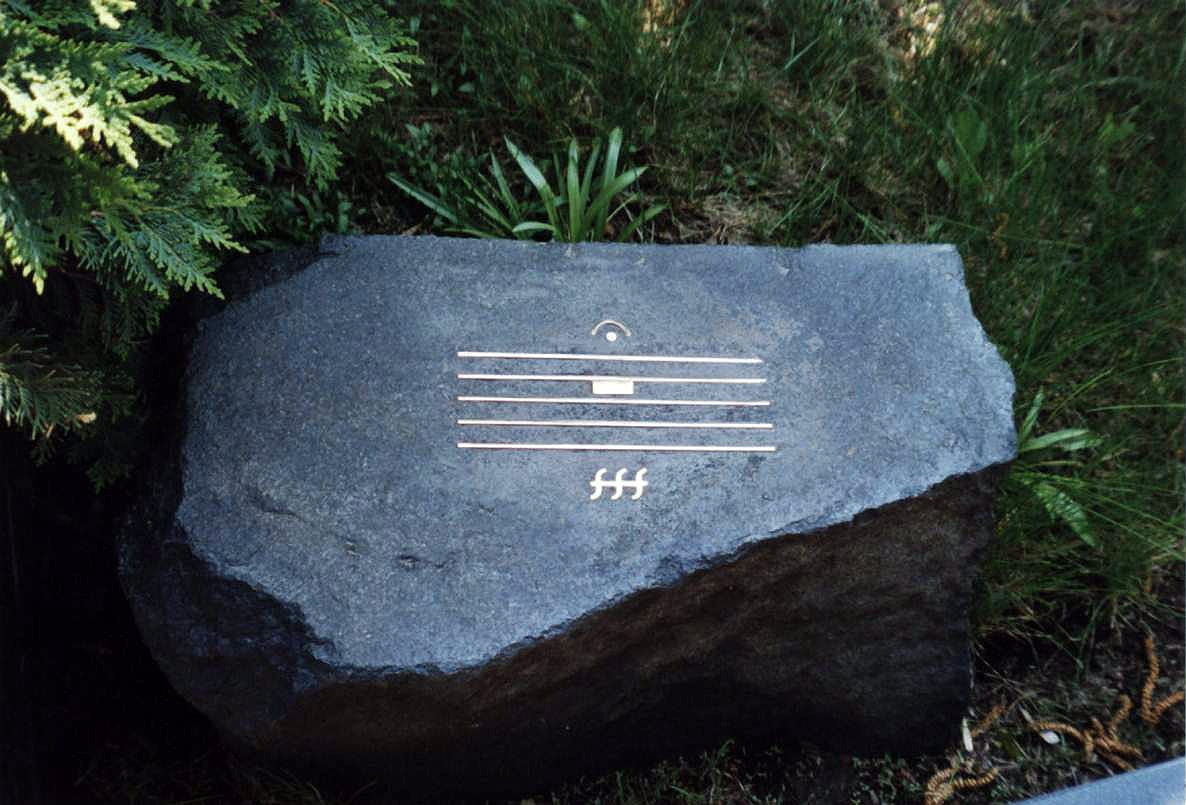
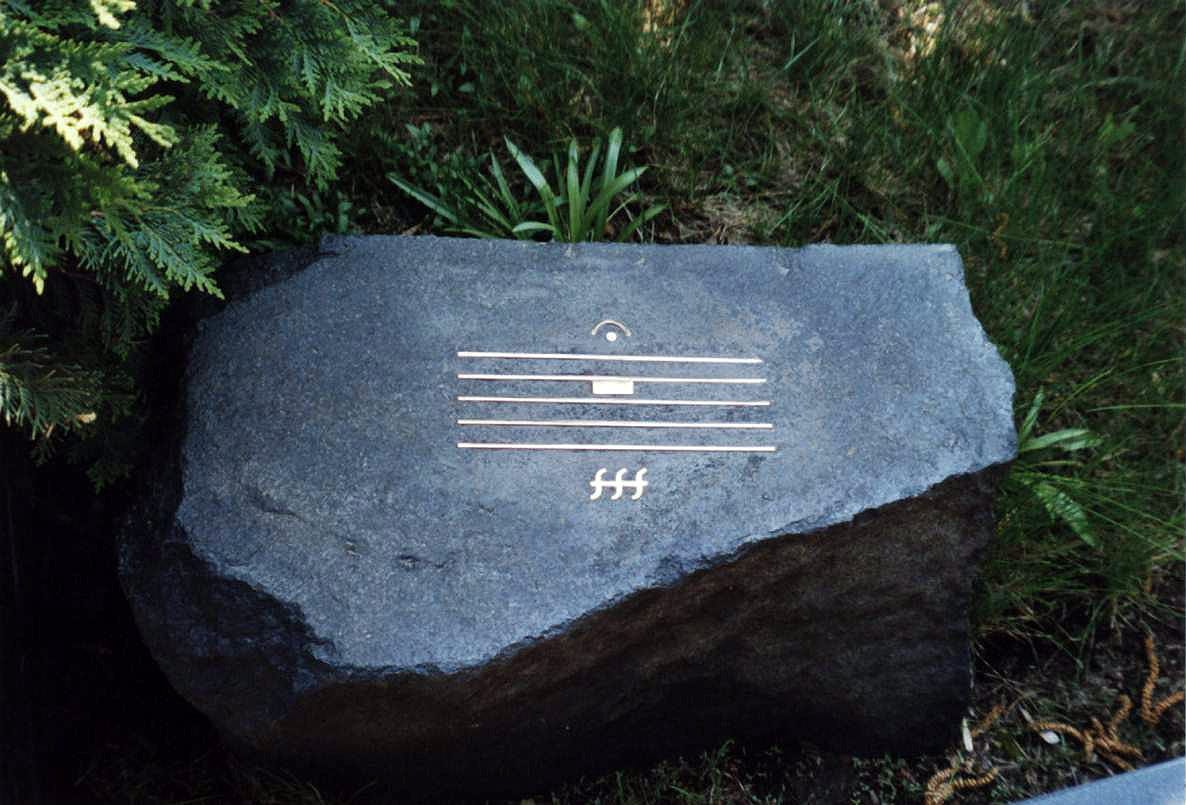
The grave stone of Russian composer Alfred Schnittke (1934-1998), showing “a long rest, played as loud as possible” (source)


Compare: “socialism” can mean either the countries of Scandinavia, i.e. the closest the human race has come to getting the permanent problem right, or the Soviet Union, i.e. about as badly as it can go.)
Robinson is another favorite of mine. (I have many favorites.)